
Contents
SEO 101: The Basics of SEO (In 6 Minutes)
What’s SEO?
SEO no longer stands for Search Engine Optimization. It’s Search Everywhere Optimization now with all the LLMs, AI, and AI wrappers around. The process of making your business visible on all platforms where your future users are doing their search.
While SEO is a vast topic (and sometimes unnecessarily complicated), here’s your SEO primer in under 5 minutes!
Broadly, SEO stands on three pillars:
- Technical SEO
- Content
- Backlinks
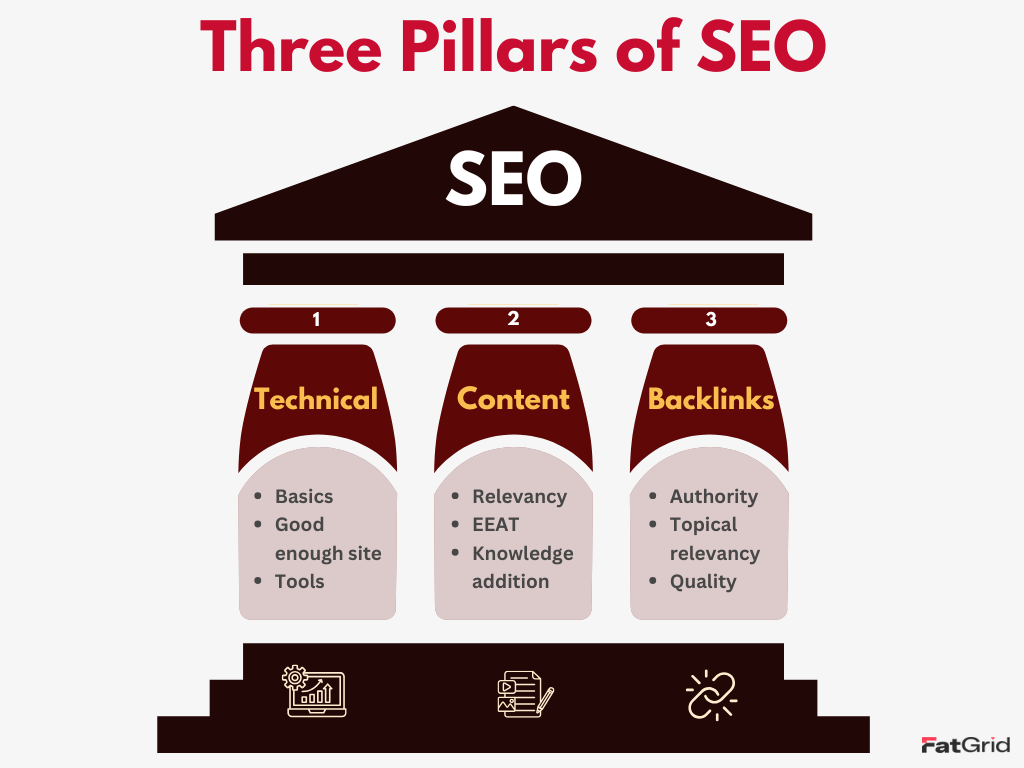
A good SEO needs all three above. And here’s how each of them works.
#1: Technical SEO
The technical part of SEO is actually quite simple. No matter how much SEOs complicate it, especially to a non-tech-savvy person, if you follow the basics, you should be good.
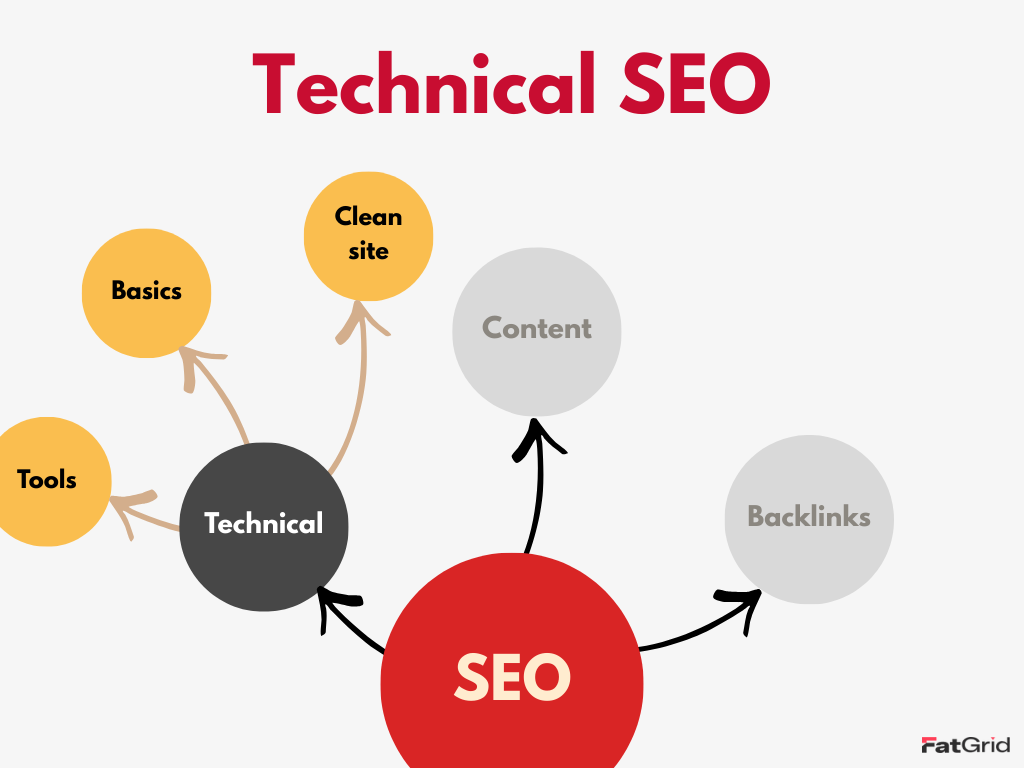
You need to get the fundamentals right. The search and AI bots crawling your site should be able to index your webpages easily.
And here’s how you do it:
Basic technical SEO pointers
- A clean functioning site: no unnecessary bloating pages, clean layout.
- Good hierarchy: webpages are organized well and are easy to navigate.
- URL structure: short, descriptive URLs (like site.com/seo-basics/ instead of site.com/p=123/).
- Fast enough: need not be the fastest, but no slow 5-second loading pages.
- Mobile-friendly: make it look good on a phone, and on different phones.
- Sitemap: have a sitemap for search and AI bots to discover your site pages easily.
- Interlinking: don’t overthink, link to other pages wherever you feel it makes sense.
If you cover these basic technical things right, you are good to go.
Tools for technical SEO
To help you with these technical aspects, you can use SEO tools like Semrush and Ahrefs. You don’t need a premium version for the most part. Check the technical health of your site on these tools, and they give you pointers to improve.
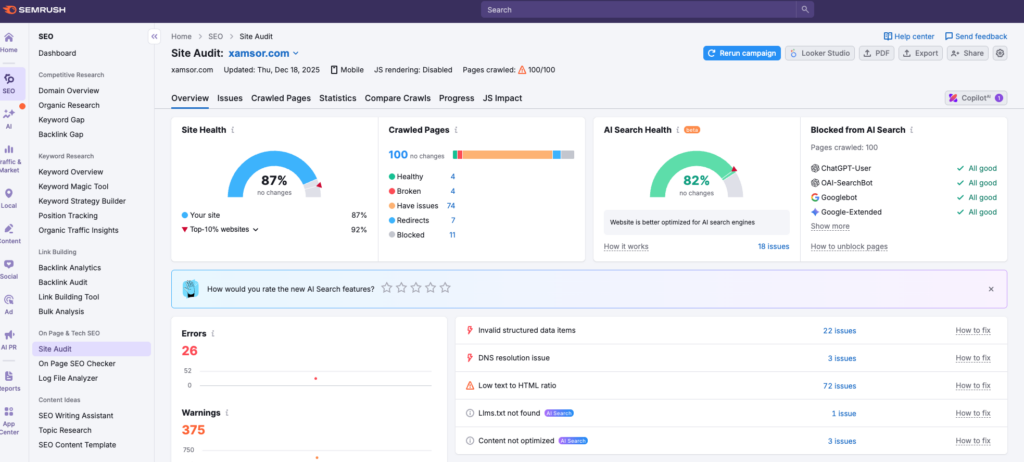
You can also use Google Search Console, which provides lots of data, including site speed, indexed pages, excluded pages, and any pages facing technical errors, etc.
Use these tools occasionally to address any technical errors.
#2: Content
Many people think you can generate content in a few clicks (or even one prompt and one click) and have your content ready and watch the traffic roll in. There are many AI tools that give you such ready content.
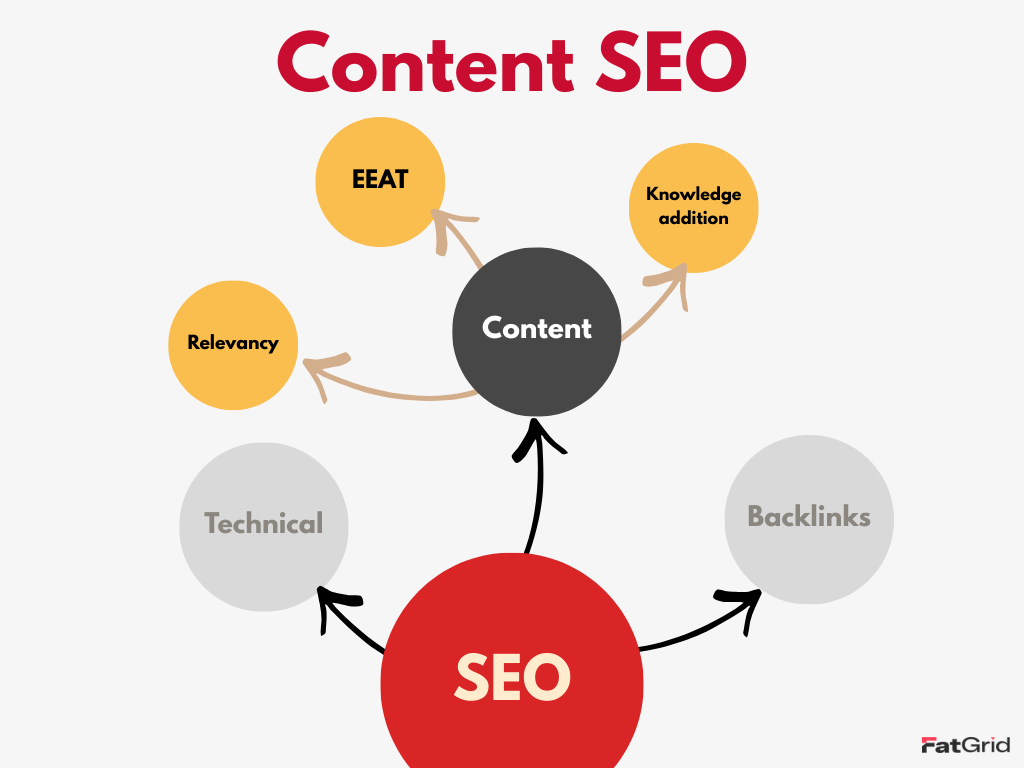
But the reality is—you can generate fast content, and it most likely won’t rank. You need “more” than that.
So, what’s that “more”?
Relevancy
You need content that speaks to your users. Any user visiting your website should want to read your content.
And that starts with the businesses and owners writing content on what their users want and need to know.
Imagine a user visits your SaaS tool site, and your content is about betting or cupcake recipes. Or worse, a boring robotic content about your own product!
Your content should speak to your users.
EEAT
Authority signals matter. The person behind the content matters. Google looks for these things, and what it calls “EEAT.”
EEAT stands for Experience, Expertise, Authoritativeness, and Trustworthiness.
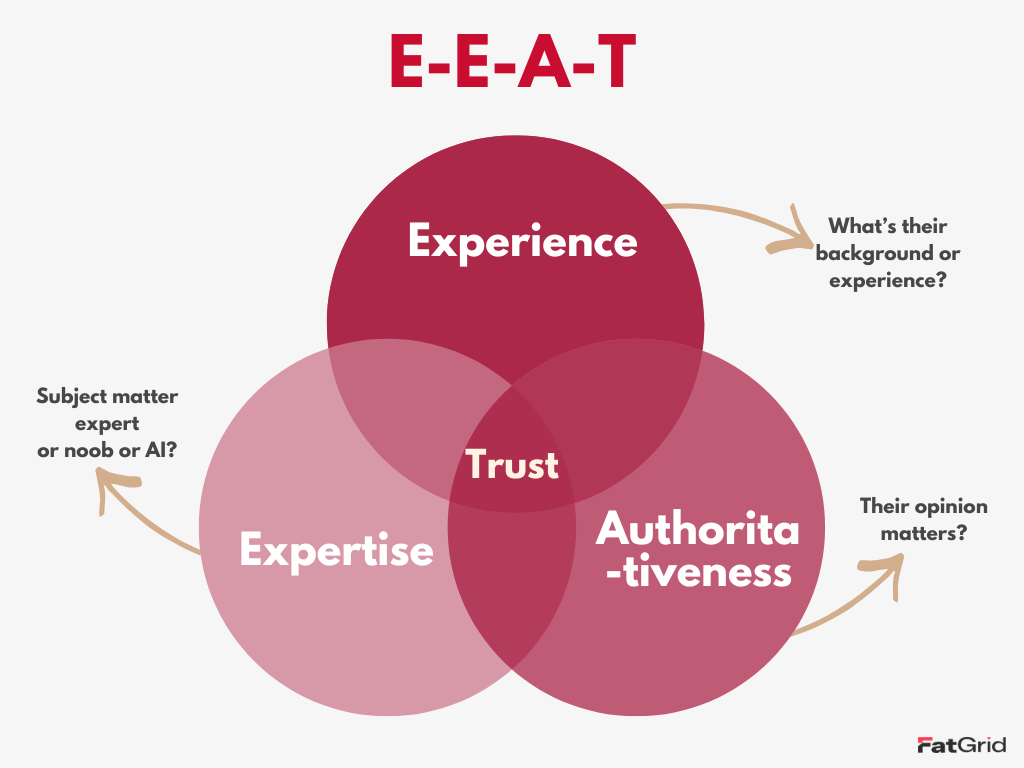
Who is writing the content? What’s their background and experience? Why does their opinion matter?
The writer behind the content should have these EEAT signals. A well-known expert on the subject matter sharing their first-hand experience and cases from their practice is high on EAAT in Google’s books.
As opposed to the content generated from LLMs, with no verifiable source, no first-hand experience, and no real person behind it.
Knowledge Addition
In its filed patent titled, Contextual estimation of link information gain, Google describes knowledge addition or information gain on a webpage. And how it’s used in search rankings.
The gist is—Google requires the content to be a mix of what Google already knows plus new knowledge.
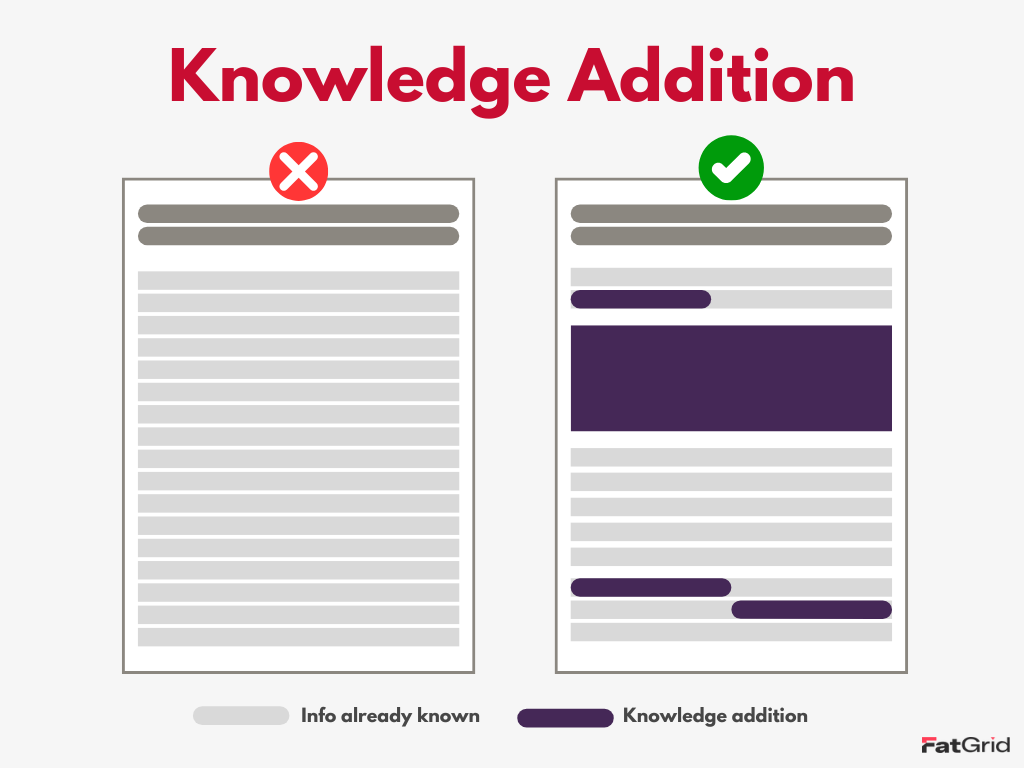
The new knowledge is unique. And is adding value to the internet over regurgitating what already exists (*cough AI-content cough*).
So what’s knowledge addition? It can be:
- Original research
- Unique insights
- A different perspective or presentation
- Personal anecdotes
- A contrarian or different take on the matter
- And many more…
Basically, anything new and fresh.
If your content doesn’t have enough knowledge addition, Google won’t deem your article valuable enough.
At the same time, too much knowledge addition without establishing a known base can also backfire. The trust score drops in those cases, and Google might not trust the content to rank higher.
Why AI-generated content doesn’t rank
All the factors above combined, it should be blatantly obvious by now.
AI-generated content is dry. No personal view. No authority or experience. And no knowledge addition. LLMs, by definition, don’t provide new knowledge. They can only repackage what already exists on the internet.
So, Google has no reason to rank AI-generated content higher. The content is just a mish-mash of existing knowledge that Google already knows.
#3: Backlinks
Backlinks, put simply, are links from other websites to yours.
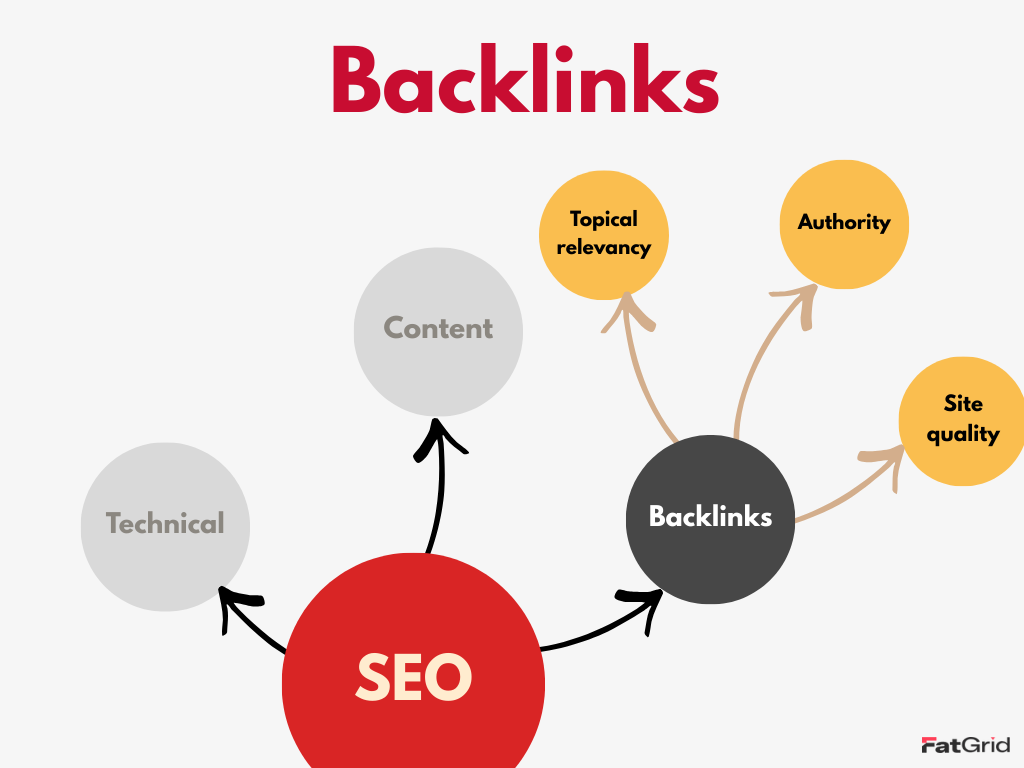
Backlinks are authority signals to Google. Links and mentions from other websites to your site are “votes of confidence.”
Now, are all backlinks the same?
Not at all. These factors matter:
Authority
Backlinks from a spam website with no traffic don’t have much value. What matters is links and mentions from websites that already rank well on Google, and in LLMs now.
The better a site is ranked and gets traffic from Google and LLMs, the more valuable its backlinks are.
Topical relevancy
You also want backlinks from sites ranking on the topic you are trying to cover.
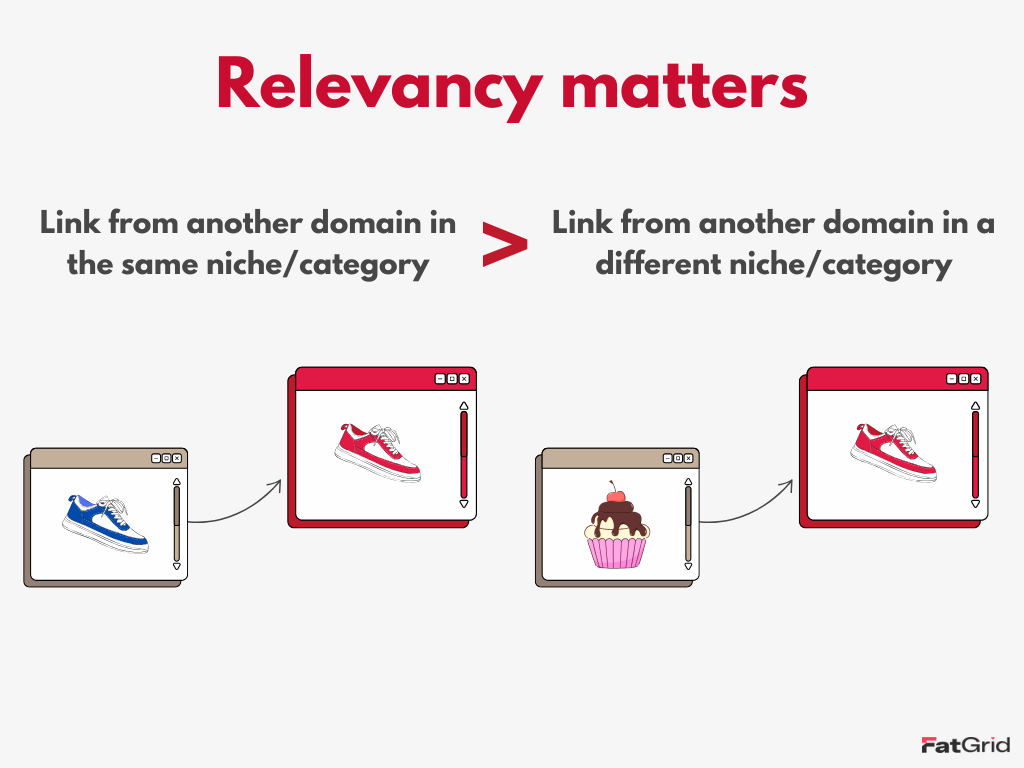
If you run a shoe store, a link from a fashion blog is awesome. A link from a tech repair site? Not much.
Website quality
While authority and topical relevancy determine the backlink value, most times, a backlink from a decent website quality holds good in boosting your rankings.
But what’s a good website quality?
Any website that gets some sort of traffic. That’s good enough. As long as it doesn’t scream spam!
Bottomline
SEO works when it stands on all three pillars.
- A good website with technical basics covered.
- Quality content that adds unique knowledge.
- And enough backlinks from sites that are getting traffic.
All three together create a system that pushes your website to rank higher on search.
